



Workplace Mental Health
In the midst of a crisis, mental health and self-care is paramount. The resources below can help you support your workforce during these uncertain times. Mental well-being has a significant impact throughout the U.S. and Canada and, in turn, throughout our workplaces and on employee benefit plans.

Mental Health in the Workplace Virtual Conference
Organizations continue to face challenges with how to respond to their participants' mental health needs and foster a healthy work environment. This event will provide best practices for when, where and how employers can support the total well-being of their employees and their families.
More Information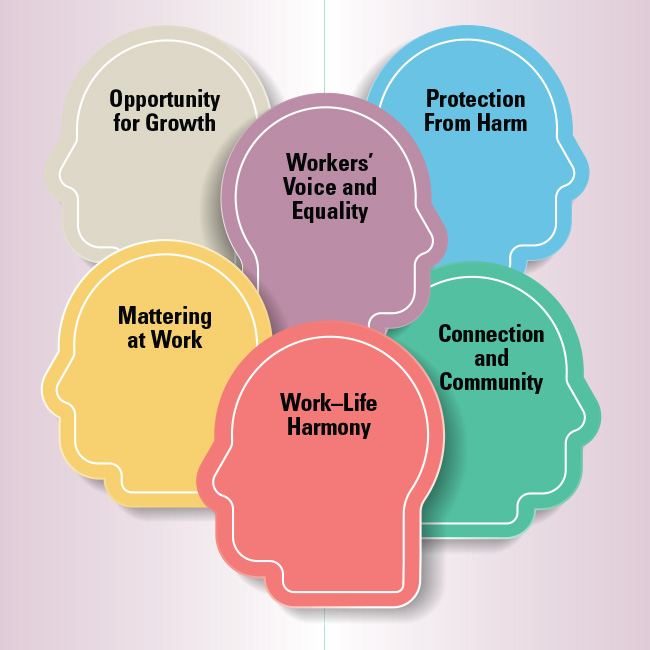
Workplace Mental Health: From Awareness to Action
Untreated mental health challenges cost U.S. employers an estimated $300 billion annually, affecting employees across diverse industries, generations and backgrounds. This webinar explores the U.S. surgeon general’s 2022 five-part framework for workplace mental health and well-being, offering practical strategies to create psychologically safe, inclusive workplaces.
Watch Webcast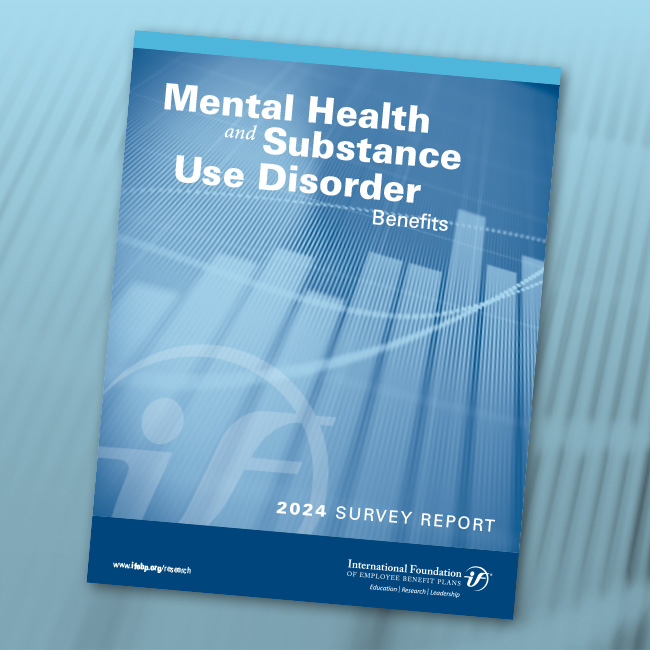
Mental Health and Substance Use Disorder Benefits: 2024 Survey Report (U.S. and Canada)
As more employees grapple with mental well-being, organizations are challenged with implementing new solutions to support mental health in the workplace. Mental Health and Substance Use Disorder Benefits: 2024 Survey Report reveals the prevalence of various mental health challenges among workers and their families. Data indicates that to combat conditions on the rise, employers are focused on improving manager mental health training, rethinking employee assistance programs (EAPs), and enhancing virtual mental health options.
View ReportQuick Links: ROI
ROI, VOI on Mental Health Benefits
Mental health benefits may not always produce a simple short-term savings story. What evidence supports a positive financial return on investment in workplace mental health initiatives?
- A Canadian vendor found employers recovered $2 for every dollar spent on integrated mental health support for women within two years. (Greenshield, July 21, 2026)
- A vendor study found a projected 507% return on investment for client companies and employers saw an average annual return of $6.07 for every dollar invested in behavioral health services. (ComPsych and the Integrated Benefits Institute, April 9, 2026)
- A cohort study found employers saved an average of $2.30 in gross health plan costs for every dollar spent on clinical care, such as psychotherapy and medication management, resulting in 14.3% net savings and 25.2% gross savings. (Journal of Health Economics and Outcomes Research, June 20, 2025)
- A cohort study found savings of $1,070 per participant in the first program year and a return on investment of 1.9 for every dollar invested measured by reduced medical claims costs. (JAMA Network Open, February 5, 2025)
- Employers that support mental health saw a return of $4 for every dollar invested in mental health treatment. (National Safety Council and NORC at the University of Chicago, May 13, 2021)
- Canadian employers saw a median return of $1.62 for every dollar invested in workplace mental health initiatives, with some organizations achieving returns as high as $10 for every dollar spent, primarily driven by productivity improvement. (Deloitte Canada, November 3, 2019)
Articles
Adversity Load to Safety at Work: Why Crisis Readiness Is Now Essential (Plans & Trusts, May/June 2026)
External pressures increasingly shape workplace conditions, adding stressors that reduce employees’ focus and resilience. What is a approach to protecting employees from psychological harm while building safer, more resilient workplaces? Psychological health and safety programs ensure that employees are not left to navigate adversity along and that emotional strain does not silently accumulate into preventable risk. Frontline crisis readiness training should prepare employees to recognize, approach, defuse and de-escalate a range of workplace brises in ways that reduce risk to themselves and to the individual in distress.
Equipped to Help: Workplace Training on Suicide Prevention and Intervention (Benefits Magazine, January/February 2026)
Workplaces can be a powerful setting for suicide prevention strategies since most people interact with work. One such strategy is gatekeeper training—otherwise known as community helper training—which teaches workers to identify and reach out to co-workers at risk for suicide and connect them to support services. Key elements of training include knowledge, skills, attitudes and self-efficacy. Using a train-the-trainer model enables organizations to embed suicide prevention into their safety culture at scale.
Workplace Strategies to Address the Global Mental Health Crisis (Benefits Magazine, January/February 2026)
Mental health affects everyone, and organizations can reduce stress, prevent burnout and boost engagement through targeted initiatives. What strategies effectively improve both business outcomes and employee well-being? Reset expectations, connect work to mission and purpose, provide ongoing coaching and actively solicit employee perspectives. When promoting mental health resources and programs, employers can incorporate mental health messages throughout the employee lifecycle, such as highlighting healthy norms during on boarding.
Psychedelics: Emerging Mental Health Treatment Option? (Benefits Magazine, May/June 2025)
As interest grows in the use of psychedelics to treat chronic mental health conditions, employee benefit plan trustees and administrators should be prepared to respond to requests to cover these new treatments. Plan sponsors should collaborate with consultants and legal counsel to educate themselves on these treatments, including those that are currently available, such as ketamine, and those that are on the horizon, like MDMA and psilocybin. Plans should also consider where treatment services are provided (e.g., in-clinic/in-office versus at-home treatments), utilization management and the costs associated with different treatment modalities.
More articles available in Benefits Knowledge Center
Additional Resources
- InfoQuick: Mental Health Parity and Addiction Equity Act
- Legislative Tracker (U.S.)
- Regulatory Updates (U.S. and Canada)
- Canadian Legislative Scorecard
- Sample Documents (U.S. and Canada)
- Pillar of Support: Employee Assistance Programs Create Stronger Workplace Foundations (John McCormack, CMA Today, March/April 2023. Permission to reproduce granted by the American Association of Medical Assistants.)
Podcasts
Videos
Ask a Benefits Question
Not finding what you're looking for? We'll do the digging for you on any benefits-related topic.
Reach out to an Information Specialist today.