



Summit Features
Five Keynote Sessions | Concurrent Sessions | Networking
Welcome Reception | Wellness Networking Activities | Exhibit Hall
Book Signings | Evening Entertainment| Wellness Alliance Hub
Well Workplace Award Winner Recognition | CWP Lounge | Podcast Studio
Agenda
8:30 AM - 10:00 AM
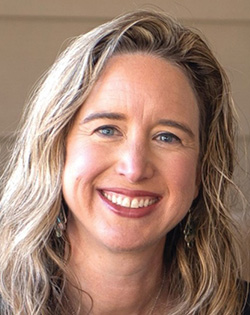
Founded in the United States in 1948, Dr. Bronner's is the top-selling natural soap brand in North America and a leading mission-driven brand worldwide. The company is a third-generation, independent, family-owned business based in Vista, California. Guided by its six Cosmic Principles, the company offers unparalleled employee benefits, including childcare and tuition assistance, zero-deductible health care coverage, onsite bootcamp, subsidized massages, and a fantastic daily vegan lunch. Benefits are offered equally across all company positions in recognition of the humanity of each employee, a principle at the core of company founder Emanuel Bronner's All-One philosophy and Constructive Capitalism principles. Lisa Bronner will share the leadership and decision-making processes, undergirded by a 5:1 executive salary cap, that make these benefits possible and fuel outcomes such as an annual employee turnover rate of only 4%, double-digit average annual company growth over the last 25 years, and a contribution of 30% of profits to charitable and activist causes.
Attendees will be able to:
- Assess equity in benefits access and analyze the strategic impact of compensation ratios
- Envision a financially sustainable, values-aligned rewards initiative
- Craft a compelling business case that connects employee care and wellness to company performance.
10:30 AM - 11:30 AM
What does it take to move beyond isolated programs and build a practical, sustainable culture of well-being? This interactive session introduces a systems-based approach that helps practitioners align purpose, people, priorities, pathways, and practices (the why, who, what, how, and when) across campuses, health care systems, and communities. Using real-world examples and hands-on tools, this session will allow participants to reflect on where their current efforts are strong—and where gaps, overlaps, or opportunities exist. Attendees will leave with adaptable frameworks and actionable next steps to improve coordination, strengthen impact, and make their well-being work easier to implement and sustain.
Attendees will be able to:
- Describe how purpose, people, priorities, pathways, and practices work together to support effective, systems-based health education and well-being initiatives
- Examine where current health education efforts may be siloed, duplicative, or misaligned, and identify opportunities to improve coordination and reach
- Apply practical planning and alignment tools to strengthen program design, collaboration, and evaluation within their health education practice.
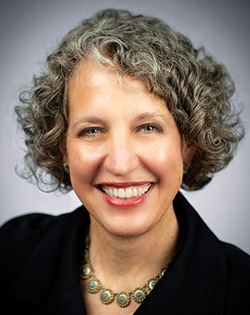
2:00 PM - 3:00 PM
This session weaves together the speaker's personal journey of surviving stage III colorectal cancer with their professional role as the division director for nutrition and physical activity for the Indiana Department of Health, leading the statewide Food is Medicine initiative. Participants will explore how centering the patient experience can shape program design, policy development, and coalition building to improve health outcomes and chronic disease prevention. The talk will emphasize practical strategies for integrating food and nutrition into wellness frameworks across clinical, community, and policy settings.
Attendees will be able to:
- Identify the role of food and nutrition in cancer prevention, survivorship, and overall wellness
- Analyze how patient-centered experiences can inform program design and policy development in Food is Medicine initiatives
- Apply strategies for integrating nutrition and physical activity into public health and health care systems to improve outcomes and advance wellness.
-
Naima Gardner, M.P.H.
2:00 PM - 3:00 PM
This highly interactive session offers a behind-the-scenes look at facilitating effective team-building activities from start to finish. Participants will experience a live team-building activity while learning how to intentionally lead introductions, establish group agreements, and facilitate meaningful debriefs. Throughout the session, the facilitator will model and unpack strategies that promote psychological safety, inclusive participation, and purposeful learning. Attendees will leave with practical tools they can immediately apply to their own groups and contexts.
Attendees will be able to:
- Create, design, and facilitate introductions and group agreements that establish psychological safety and align team-building activities with participant needs and goals
- Implement a team-building activity with intentional facilitation strategies that support engagement, equity, and multiple participation styles
- Apply practice for effective debriefs that connect experiential learning to real-world application and refocus discussion when it moves off track.
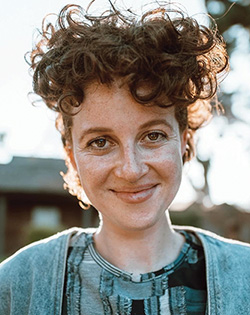
8:30 AM - 10:15 AM
Disruption isn't a future event; it's our current operating environment. Health care uncertainty, economic whiplash, cultural change, and global instability have made leadership more complex, more personal, and more consequential than ever. In this candid and energizing session, Dr. Michael Burcham challenges the idea that leadership is about having the right answers. Instead, he shows why the leaders who endure—and emerge stronger—are those who can make clear, principled decisions when certainty is unavailable and pressure is unavoidable. Drawing from decades of advising founders, executives, investors, and public-sector leaders, Michael shares real stories from the front lines of disruption, as well as insights from moments when the map was wrong, the data incomplete, and the stakes very real. His message is especially relevant for solopreneurs and mid-level leaders who are quietly carrying more responsibility than their titles suggest. This session is about what happens after the frameworks fail: when the data is incomplete, the clock is ticking, and people are looking to you for direction. Leadership in these moments is not performative. It's quiet, disciplined, and consequential. The ability to decide well, under pressure, is what ultimately separates leaders who endure from those who don't.
Attendees will be able to:
- Demonstrate how to lead decisively when the playbook no longer applies
- Utilize a practical framework for making high-quality decisions under pressure
- Employ ways to stabilize yourself (and others) when anxiety and ambiguity rise
- Demonstrate how you earn trust and build momentum during uncertain times.
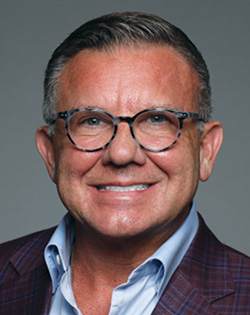
10:45 AM - 11:45 AM
People sometimes hit an internal barrier that causes them to feel stuck and unable to progress in improving their lifestyle, thus diminishing progress, motivation, and self-efficacy. In this session, we will explore and demonstrate strategies and techniques to circumvent the type of linear, analytic thinking, assumptions, and self-defeating perspectives that hold a person back from success. Using a person-centered approach, we will employ elements of Solution-Focused Therapy and the Transtheoretical Model of Behavioral Change to demonstrate how to work with metaphor and analogy, guided fantasy, visualization, and reframing to help facilitate new thinking and help people discover a way forward to successful change.
Attendees will be able to:
- Identify at least three positive cognitive and emotive techniques for facilitating clients' breaking through internal barriers to lifestyle improvement
- Describe the role that readiness for behavioral change plays in facilitating the resolution of internal barriers
- Describe a holistic behavioral change methodology for moving ahead with lifestyle improvement.
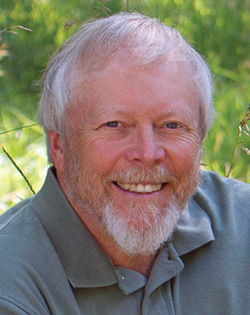
10:45 AM - 11:45 AM
Loneliness has become one of the defining health challenges of our time, yet many communities lack shared structures and literacy for emotional processing and support. This session explores community grief tending—an evidence-informed, cross-cultural practice that transforms isolation into connection through intentional rituals and collective expression. Participants will learn how structured communal grief processes can improve resilience, belonging, and mental well-being in diverse settings. Using case studies and experiential reflection, this session offers practical tools for bringing grief-tending practices into wellness programs, offices, and community spaces.
Attendees will be able to:
- Explain the psychological and physiological impacts of unprocessed grief and prolonged loneliness
- Identify key elements of community grief tending and how they support connection and belonging (with case studies)
- Practice simple, adaptable frameworks for facilitating collective grief rituals in culturally diverse settings.
-
Alyssa Rose
1:15 PM - 2:15 PM
Employees are increasingly turning to AI tools not just for productivity but also for emotional support, coaching, and therapy-like conversations, often on employer-provided platforms, such as ChatGPT and Microsoft Copilot. Recent reports suggest that more than a million people each week discuss suicidal thoughts with ChatGPT, while traditional supports, such as employee assistance programs (EAPs), still see single-digit utilization. Dr. Serena Huang will unpack how AI is quietly becoming an emotional companion at work, as well as what that means for wellness and benefits leaders. This session focuses on practical, evidence-informed strategies to update policies, protect employees, and design human-first AI ecosystems that complement, rather than compete with, existing mental health supports.
Attendees will be able to:
- Use a simple human risk and well-being lens to assess one AI- or tech-enabled support channel in their organization, applying core principles, human risk lenses, and operating practices to identify where employees may already be using AI or digital tools for emotional support
- Identify at least three concrete human risks and data signals relevant to their own organization and link each risk to specific places in their current benefits and well-being strategy where mitigation is needed
- Draft one measurable change to their benefits or well-being roadmap that balances human-first care with ROI, such as refining communication and consent language, adding clear referral pathways from AI/digital tools to human support, or incorporating a small set of metrics to quantify whether new interventions are improving employee trust and well-being outcomes over time.
-
Serena Huang, Ph.D.
1:15 PM - 2:15 PM
Small wellness teams are often asked to improve claims outcomes, increase engagement, and meet diverse employee needs without additional staff or resources. This session introduces a practical planning framework that helps wellness leaders prioritize programs at the intersection of claims data, employee engagement, and team capacity. Participants will learn how to translate high-level benefits data into meaningful, human-centered programming while protecting team bandwidth and avoiding burnout. Through real-world examples and guided application, attendees will leave with a clear, repeatable approach they can implement immediately within their own organizations.
Attendees will be able to:
- Apply a three-lens planning model to prioritize wellness programs that align with medical claims data, employee engagement, and team capacity
- Translate top claims drivers into behavior-focused, accessible wellness programs that employees are more likely to use.
Build a focused wellness plan and team expectations that maximize impact while protecting staff capacity and sustainability.
-
Kourtney Bassett, MS, CHES
1:15 PM - 2:15 PM
This interactive session will teach participants how to design and lead a Midday Move. These “exercise snacks” are short, accessible movement breaks that boost energy, connection, and well-being across teams. Drawing from the successful St. Luke's Health System Midday Move program, participants will explore the psychology of engagement and leave with a ready-to-use framework to launch or enhance movement-based wellness moments in their own organizations.
Attendees will be able to:
- Identify the key components of an effective and inclusive movement break that enhances well-being and engagement
- Facilitate a five- to ten-minute Midday Move session tailored to different team settings or energy levels
- Apply strategies to sustain participation and integrate movement moments into organizational culture.
-
Eren Barker, MS, ATC, CSCS, LSSGB
3:30 PM - 5:00 PM
We often talk about physical health and mental health, but there's another pillar of well-being that we've been overlooking—it's at the root of why so many of us feel exhausted despite rest, disconnected despite success, and burned out despite all our wellness practices. Creative health is the emerging field focused on the cognitive and emotional capacities that allow us to feel genuinely rejuvenated, vital, and fully alive. In this keynote, Katina Bajaj, creative health scientist and chief science officer of Daydreamers, explores why creativity is a biological necessity in an overwhelmed world, how it revives our nervous system in ways sleep alone cannot, and the science-backed practices wellness professionals can bring back to their work and organizations. Attendees will leave with an accessible new framework for understanding vitality and practical tools to help themselves and their communities reclaim what makes them feel most alive.
Attendees will be able to:
- Understand creative health as a distinct dimension of well-being, alongside physical and mental health
- Learn the neuroscience behind why creative engagement uniquely restores vitality and combats burnout, especially for underserved populations
- Identify the barriers to developing creative health in individuals and communities
- Gain practical, evidence-based practices to integrate creative health into existing wellness frameworks or programs.
9:30 AM - 10:30 AM
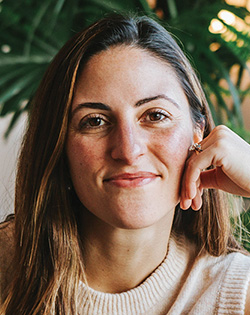
Most of us carry far more stress than our bodies were designed to hold, and our tendency to stay “on” long after the moment of challenge has passed leaves our bodies flooded with lingering stress hormones. Drawing on Skye Nicholson's background in science education and poetry, along with positive findings from a year's worth of data from her Managing the Stress Cycle program, this session blends evidence-informed stress science with engaging expressive writing practices. Participants will take part in two simple, interactive, poetry-based micropractices, supported by decades of research on expressive writing and its impact on mental health, emotional processing, and physiological regulation. The session demonstrates how practical tools to close the stress cycle can be integrated into meetings, check-ins, or trainings to strengthen resilience, promote work-life balance, and build connection, leaving attendees with clear implementation ideas for fostering healthier work environments.
Attendees will be able to:
- Explain the concept of the stress cycle and describe how incomplete stress responses contribute to chronic stress, physiological strain, and diminished workplace well-being
- Identify common numbing habits that interfere with completing the stress cycle and evaluate alternative evidence-informed strategies for reducing stress hormones and restoring regulation
- Apply a simple, evidence-informed expressive reflection micropractice and adapt it for use in various settings, such as team meetings or professional development sessions, to support healthier coping, improved communication, and a more balanced work experience.
-
Skye Nicholson
9:30 AM - 10:30 AM
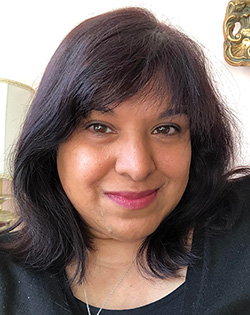
Ritual is a human technology for meaning-making, transition, and resilience—Yet it is often misunderstood as religion or dismissed or mischaracterized as unscientific. This skill-building lab trains wellness professionals to design and facilitate brief microrituals (two to five minutes) that support recovery from burnout and moral fatigue in diverse settings. Participants will learn a simple, repeatable, ritual-design framework and practice applying two critical safety filters: a No-Bypassing Check (to prevent forced positivity harm) and a Cultural Humility Check (to support ethical adaptation, attribution, and audience fit). Learners will leave with two facilitation-ready microrituals, a short facilitation script, and take-home templates they can implement immediately in workplaces, campuses, and community programs.
Attendees will be able to:
- Differentiate between ritual, habit, and routine, and explain at least two evidence-informed ways ritual supports resilience and meaning-making
- Design and document two brief microrituals (two to five minutes) using the Intention → Symbol → Action → Witness → Integration framework
- Apply and evaluate two ethical safety filters—No-Bypassing Check and Cultural Humility Check—to revise a microritual for inclusivity, consent, and professional appropriateness.
10:45 AM - 12:00 PM
Leadership is not a title. It is a behavior, and culture is built in the moments we think do not matter. In this closing keynote, Kyle Ewing reframes leadership for those without formal authority and shows how trust, ownership, and well-being are shaped from the middle of organizations, not just the top. Drawing from real-world experience building high-performance teams, Kyle reveals how small shifts in language, responsibility, and service can transform burnout into engagement and compliance into commitment. Attendees will learn how healthy cultures are sustained by people who take initiative, remove friction for others, and model clarity under pressure. This session is not about doing more or carrying the weight alone. It is about leading in ways that make work more human, sustainable, and energizing. The keynote closes the Summit with a renewed sense of agency and responsibility, reminding attendees that culture change starts exactly where they are.
Attendees will be able to:
- Identify at least three daily behaviors that strengthen trust, ownership, and psychological safety within their teams or organizations
- Apply servant leadership principles to reduce friction, improve collaboration, and support well-being regardless of job title or seniority
- Demonstrate how to positively influence workplace culture through clear communication, accountability, and service-oriented leadership actions.
-
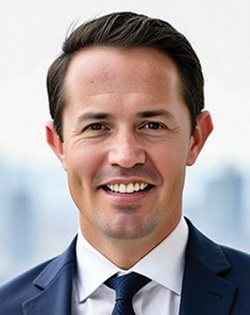 Kyle Ewing, MBA
Speakers

Eren Barker, MS, ATC, CSCS, LSSGB
Program Manager
St. Luke's Health System
Kourtney Bassett, MS, CHES
Assistant Director, Employee Wellness
Texas A&M University
Kyle Ewing, MBA
Founder and CEO
TerraSlate
Naima Gardner, M.P.H.
Director, Division of Nutrition and Physical Activity
Indiana Department of Health
Serena Huang, Ph.D.
Founder & Author
Data With Serena
Skye Nicholson
Founder and CEO
Wellbeing Workshops Co
Alyssa Rose
Grief Guide, Ritualist, and Educator
Alyssa Rose Healing Arts
Continuing Education Credits
Earn the CE credits you need to maintain your wellness and benefits-related designations!
CE credits are available for attending educational sessions during the 2026 Annual Wellness Summit's Core Conference, July 28-30 and for participating in a Preconference on July 27. CE credit approval for all sessions is not guaranteed.
All educational sessions are pre-approved for Category 1 CE credit for Certified Wellness Practitioners (CWP). CEBS Compliance credits may be earned for select sessions. The Wellness Alliance is also applying for CE credit approval for the following organizations/designations: ACSM, NCHEC (CHES®/MCHES®), HRCI®, NBHWC, and SHRM®.
Updates regarding the
number and types of credit available for each Core Conference session
and for the Preconferences will be posted here closer to the Summit.
Claiming Credit
To
receive credit for all sessions you attend in full, ensure the Summit
staff outside the session room initials your CE Credit Checklist as you
leave each session (including Preconferences and Keynote Presentations).
Printed copies of the Checklist may be picked up at the registration
table. CE Credit Checklists must be turned in at the registration table
by the end of the Summit. Certificates will be emailed within six weeks
to participants who have claimed credit.