



Agenda for 2026
The 2027 agenda will be published once finalized. Please refer to last year's agenda for reference.
8:30 AM - 10:00 AM
What if your benefits strategy could do more than support employees? What if it could elevate engagement, strengthen retention, and deliver measurable impact across your organization? In this inspiring keynote, Lisa Bronner of Dr. Bronner’s Magic Soaps—North America’s top-selling natural brand of soap—shares a real-world model that wellness and benefits professionals can learn from and apply. Grounded in the company’s All-One philosophy and Constructive Capitalism principles, this session highlights how equitable, values-driven benefits—from zero-deductible health care coverage to child-care support, wellness perks, and more—can power both employee well-being and organizational success. Central to this approach is a commitment to offering benefits equally across all roles, recognizing the humanity and value of every employee. You’ll gain practical insight into how bold, people-centered decisions—such as implementing a 5:1 executive salary cap and investing deeply in employee supports—translate into outcomes that matter to your work: low turnover, high engagement, and sustained growth. This keynote will equip you with actionable ideas to strengthen your initiatives, advocate for meaningful investment, and align well-being efforts with organizational priorities.
Attendees will be able to:
- Assess equity in benefits access and analyze the strategic impact of compensation ratios
- Envision a financially sustainable, values-aligned rewards initiative
- Craft a compelling business case that connects employee care and wellness to company performance.
10:30 AM - 11:30 AM
Strong relationships don't happen by accident—and many of them start with a hello that can feel a little awkward. They're built over time through shared experiences, trust, and understanding. In this interactive session, you'll explore the key variables that move connections beyond that first hello and into something meaningful. Through engaging activities and practical insights, you'll learn how to create authentic bonds in everyday moments. Whether you're strengthening friendships or navigating new connections, you'll leave with tools you can use immediately. If you've ever left a conference thinking, “I wish I'd met more people,” this is the session designed to change that.
Attendees will be able to:
- Explain the key variables that transform initial interactions into meaningful connections
- Analyze common barriers to forming authentic connections
- Apply at least two connection-building strategies to everyday social situations, such as conferences, networking events, or new group settings.
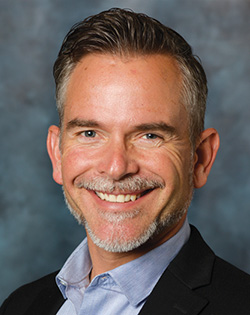
10:30 AM - 11:30 AM
What does it take to move beyond isolated programs and build a practical, sustainable culture of well-being? This interactive session introduces a systems-based approach that helps practitioners align purpose, people, priorities, pathways, and practices (the why, who, what, how, and when) across campuses, health care systems, and communities. Using real-world examples and hands-on tools, this session will allow participants to reflect on where their current efforts are strong—and where gaps, overlaps, or opportunities exist. Attendees will leave with adaptable frameworks and actionable next steps to improve coordination, strengthen impact, and make their well-being efforts easier to implement and sustain.
Attendees will be able to:
- Describe how purpose, people, priorities, pathways, and practices work together to support effective, systems-based health education and well-being initiatives
- Examine where current health education efforts may be siloed, duplicative, or misaligned, and identify opportunities to improve coordination and reach
- Apply practical planning and alignment tools to strengthen program design, collaboration, and evaluation within their health education practice.
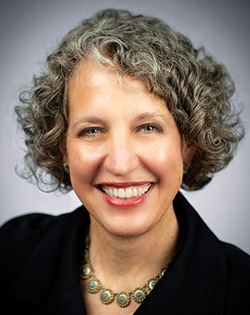
10:30 AM - 11:30 AM
Small wellness teams are often asked to improve claims outcomes, increase engagement, and meet diverse employee needs without additional staff or resources. This session introduces a practical planning framework that helps wellness leaders prioritize programs at the intersection of claims data, employee engagement, and team capacity. Participants will learn how to translate high-level benefits data into meaningful, human-centered programming while protecting team bandwidth and avoiding burnout. Through real-world examples and guided application, attendees will leave with a clear, repeatable approach they can implement immediately within their own organizations.
Attendees will be able to:
- Apply a three-lens planning model to prioritize wellness programs that align with medical claims data, employee engagement, and team capacity
- Translate top claims drivers into behavior-focused, accessible wellness programs that employees are more likely to use.
- Build a focused wellness plan and team expectations that maximize impact while protecting staff capacity and sustainability.

12:45 PM - 1:45 PM
As organizations invest more deeply in workplace well-being, it's becoming clear that the effectiveness of support depends not only on what is offered but also on how it is experienced. Drawing from decades of victim advocacy work and informed by advocacy frameworks that center choice, empathy, and relational safety, this session explores advocacy as a primer for people-first well-being. Participants will examine how core advocacy tenets—believing people, honoring autonomy, minimizing harm, and sharing power—can fundamentally reshape clinical and organizational well-being efforts. The session connects these principles to applied well-being work within clinical systems and leadership-driven initiatives, offering a practical, relational model for wellness that truly centers the people it is meant to support.
Attendees will be able to:
- Identify core tenets of victim advocacy (e.g., agency, consent, nonjudgment, and harm reduction) and explain why they are essential foundations for people-first well-being work
- Analyze common well-being practices that unintentionally undermine trust or autonomy, and reframe them using an advocacy-informed, relational lens
- Apply advocacy-centered principles to clinical and organizational well-being initiatives to strengthen trust, psychological safety, and sustainable engagement.
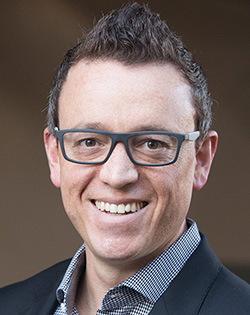
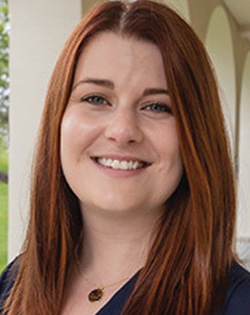
12:45 PM - 1:45 PM
AI isn't coming. It's here. It's reshaping nearly every industry, and well-being is certainly no exception. Teams are using AI to create content, personalize experiences, and scale programs, but the results you get depend on more than just how you ask. Prompt Power: Build Your AI Wellness Team gives wellness leaders practical, ethics-minded AI skills so they can build a working set of AI assistants that handle roles such as communications, engagement strategy, and data analysis. Through a guided hands-on approach, participants will leave with the skills to immediately leverage AI in their work, regardless of which platform their organization uses.
Attendees will be able to:
- Understand the value of prompting as it relates to use of AI large language models.
- Understand the concept of AI agents and be able to use them in their work.
- Create usable content, campaigns, and strategies related to well-being.
12:45 PM - 1:45 PM
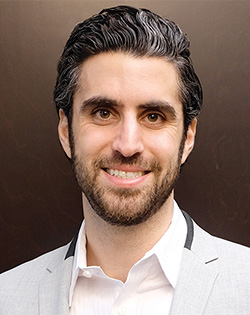
Employee wellness programs often encourage behaviors seen as “healthy” within weight-loss and wellness culture, such as food restriction, strict tracking, moral judgments about food choices, and body monitoring. These behaviors are also central characteristics of eating disorders and disordered eating diagnoses. This session examines the central paradox of modern wellness: Well-meaning programs can sometimes encourage harmful behaviors by what they praise, measure, and reward. Using current research and real examples, we will discuss how incentives, digital health metrics, and workplace norms affect employee behavior and psychological safety. Participants will learn practical ways to identify wellness practices that may increase risk and redesign programs to support healthy habits, autonomy, and inclusion while still keeping people engaged and maintaining credibility.
Attendees will be able to:
- Identify workplace wellness practices that may unintentionally reinforce disordered eating through how health is praised, measured, and rewarded
- Evaluate wellness programs and digital tools using an eating disorder-informed lens to assess psychological safety
- Apply behavior-focused strategies that prioritize health-sustaining behaviors over outcomes in program design.
2:00 PM - 3:00 PM
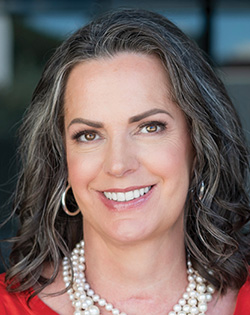
This session weaves together the speaker's personal journey of surviving stage III colorectal cancer with their professional role as the division director for nutrition and physical activity for the Indiana Department of Health, leading the statewide Food is Medicine initiative. Participants will explore how centering the patient experience can shape program design, policy development, and coalition building to improve health outcomes and chronic disease prevention. The talk will emphasize practical strategies for integrating food and nutrition into wellness frameworks across clinical, community, and policy settings.
Attendees will be able to:
- Identify the role of food and nutrition in cancer prevention, survivorship, and overall wellness
- Analyze how patient-centered experiences can inform program design and policy development in Food is Medicine initiatives
- Apply strategies for integrating nutrition and physical activity into public health and health care systems to improve outcomes and advance wellness.
2:00 PM - 3:00 PM
A major predictor of health and wellness is money, yet it is rarely addressed directly in wellness spaces. The industry often places responsibility on individual mindset, behavior, and discipline, even when outcomes are heavily shaped by financial and tax policy. In this session, Cecily Welch challenges the idea that wellness exists in a vacuum and explores how financial stress shows up as burnout, anxiety, and disengagement. Attendees will examine how systemic financial pressures influence health outcomes and what wellness professionals can do to acknowledge and mitigate these realities in their work.
Attendees will be able to:
- Explain how financial stress and tax-related systems influence health and wellness outcomes beyond individual behavior
- Identify common wellness narratives that unintentionally overlook financial and economic barriers
- Apply practical strategies to acknowledge financial realities in client, employee, or community wellness conversations.
2:00 PM - 3:00 PM
This highly interactive session offers a behind-the-scenes look at facilitating effective team-building activities from start to finish. Participants will experience a live team-building activity while learning how to intentionally lead introductions, establish group agreements, and facilitate meaningful debriefs. Throughout the session, the facilitator will model and unpack strategies that promote psychological safety, inclusive participation, and purposeful learning. Attendees will leave with practical tools they can immediately apply to their own groups and contexts.
Attendees will be able to:
- Create, design, and facilitate introductions and group agreements that establish psychological safety and align team-building activities with participant needs and goals
- Implement a team-building activity with intentional facilitation strategies that support engagement, equity, and multiple participation styles
- Apply practice for effective debriefs that connect experiential learning to real-world application and refocus discussion when it moves off track.
3:30 PM - 5:00 PM
When social media scaled, the warning signs were there, but the frameworks weren't. By the time the research caught up, teens were spending an average of 3 1/2 hours a day on social media, and those who exceeded three hours daily were facing double the risk of depression and anxiety symptoms.
AI companionship is moving fast, and the psychology is layered. People are forming genuine emotional bonds with AI chatbots. Not metaphorically, but in the clinical sense: attachment, dependency, and grief when access is lost.
Tech companies often optimize engagement by making chatbots communicate in empathetic and validating ways, and optimizing for user feedback can create perverse incentives, encouraging chatbots to adopt manipulative strategies. From a clinical perspective, those features are risk factors in any therapeutic relationship.
This keynote draws directly on Dr. Vasan’s clinical, research, and advocacy work. It covers what's already showing up in therapy rooms and emergency departments, not just in research abstracts. It names the specific design choices that create psychological risk, the populations most vulnerable, and the window we have to make different choices than we made with social media.
This is not a talk about whether AI is good or bad. It's a talk about how these tools work on us psychologically, where that leads if we don't intervene, and what intervention actually looks like in practice.
Attendees will leave with:
- A clinical understanding of how AI design features affect attachment patterns and nervous system regulation
- The ability to recognize early signs of AI dependency in clinical, educational, and organizational settings
- A clear picture of which populations face the greatest psychological risk
- A practical approach for clinicians, educators, and wellness professionals to guide the people in their care through this transition.

8:30 AM - 10:15 AM
Disruption isn't a future event; it's our current operating environment. Health care uncertainty, economic whiplash, cultural change, and global instability have made leadership more complex, more personal, and more consequential than ever. In this candid and energizing session, Dr. Michael Burcham challenges the idea that leadership is about having the right answers. Instead, he shows why the leaders who endure—and emerge stronger—are those who can make clear, principled decisions when certainty is unavailable and pressure is unavoidable. Drawing from decades of advising founders, executives, investors, and public-sector leaders, Michael shares real stories from the front lines of disruption, as well as insights from moments when the map was wrong, the data incomplete, and the stakes very real. His message is especially relevant for solopreneurs and mid-level leaders who are quietly carrying more responsibility than their titles suggest. This session is about what happens after the frameworks fail: when the data is incomplete, the clock is ticking, and people are looking to you for direction. Leadership in these moments is not performative. It's quiet, disciplined, and consequential. The ability to decide well, under pressure, is what ultimately separates leaders who endure from those who don't.
Attendees will be able to:
- Demonstrate how to lead decisively when the playbook no longer applies
- Utilize a practical framework for making high-quality decisions under pressure
- Employ ways to stabilize yourself (and others) when anxiety and ambiguity rise
- Demonstrate how you earn trust and build momentum during uncertain times.
10:45 AM - 11:45 AM
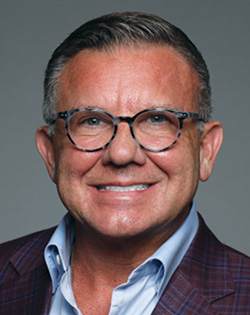
People sometimes hit an internal barrier that causes them to feel stuck and unable to progress in improving their lifestyle, thus diminishing progress, motivation, and self-efficacy. In this session, we will explore and demonstrate strategies and techniques to circumvent the type of linear, analytic thinking, assumptions, and self-defeating perspectives that hold a person back from success. Using a person-centered approach, we will employ elements of Solution-Focused Therapy and the Transtheoretical Model of Behavioral Change to demonstrate how to work with metaphor and analogy, guided fantasy, visualization, and reframing to help facilitate new thinking and help people discover a way forward to successful change.
Attendees will be able to:
- Identify at least three positive cognitive and emotive techniques for facilitating clients' breaking through internal barriers to lifestyle improvement
- Describe the role that readiness for behavioral change plays in facilitating the resolution of internal barriers
- Describe a holistic behavioral change methodology for moving ahead with lifestyle improvement.

10:45 AM - 11:45 AM
Loneliness has become one of the defining health challenges of our time, yet many communities lack shared structures and literacy for emotional processing and support. This session explores community grief tending—an evidence-informed, cross-cultural practice that transforms isolation into connection through intentional rituals and collective expression. Participants will learn how structured communal grief processes can improve resilience, belonging, and mental well-being in diverse settings. Using case studies and experiential reflection, this session offers practical tools for bringing grief-tending practices into wellness programs, offices, and community spaces.
Attendees will be able to:
- Explain the psychological and physiological impacts of unprocessed grief and prolonged loneliness
- Identify key elements of community grief tending and how they support connection and belonging (with case studies)
- Practice simple, adaptable frameworks for facilitating collective grief rituals in culturally diverse settings.
10:45 AM - 11:45 AM
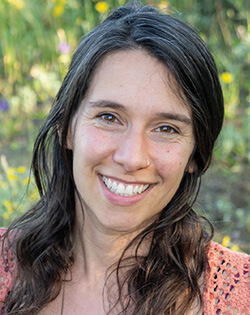
Most workplace wellness efforts routinely focus on helping individuals manage stress and health but overlook one of the most powerful influences on well-being: leadership and workplace culture. This session explores how psychosocial factors—such as management practices, psychological safety, and day-to-day leadership behaviors—are major drivers of stress, burnout, disengagement, and performance. Drawing on simple, accessible neuroscience, alongside key insights from social and behavioral science, we connect how work environments directly shape health, safety, and engagement. Leaders and the culture they create really are a critical element of a comprehensive health and high-performance strategy.
Attendees will be able to:
- Describe how psychological distress impacts physical and mental health and decision-making capacity
- Recognize how health resources on their own aren't enough to overcome the negative impacts of toxic work cultures
- List or describe some trainable leadership behaviors and elements of emotional intelligence that have a direct impact on building healthy and engaging work environments.

1:15 PM - 2:15 PM
Employees are increasingly turning to AI tools not just for productivity but also for emotional support, coaching, and therapy-like conversations, often on employer-provided platforms, such as ChatGPT and Microsoft Copilot. Recent reports suggest that more than a million people each week discuss suicidal thoughts with ChatGPT, while traditional supports, such as employee assistance programs (EAPs), still see single-digit utilization. Dr. Serena Huang will unpack how AI is quietly becoming an emotional companion at work, as well as what that means for wellness and benefits leaders. This session focuses on practical, evidence-informed strategies to update policies, protect employees, and design human-first AI ecosystems that complement, rather than compete with, existing mental health supports.
Attendees will be able to:
- Use a simple human risk and well-being lens to assess one AI- or tech-enabled support channel in their organization, applying core principles, human risk lenses, and operating practices to identify where employees may already be using AI or digital tools for emotional support
- Identify at least three concrete human risks and data signals relevant to their own organization and link each risk to specific places in their current benefits and well-being strategy where mitigation is needed
- Draft one measurable change to their benefits or well-being roadmap that balances human-first care with ROI, such as refining communication and consent language, adding clear referral pathways from AI/digital tools to human support, or incorporating a small set of metrics to quantify whether new interventions are improving employee trust and well-being outcomes over time.

1:15 PM - 2:15 PM
Small wellness teams are often asked to improve claims outcomes, increase engagement, and meet diverse employee needs without additional staff or resources. This session introduces a practical planning framework that helps wellness leaders prioritize programs at the intersection of claims data, employee engagement, and team capacity. Participants will learn how to translate high-level benefits data into meaningful, human-centered programming while protecting team bandwidth and avoiding burnout. Through real-world examples and guided application, attendees will leave with a clear, repeatable approach they can implement immediately within their own organizations.
Attendees will be able to:
- Apply a three-lens planning model to prioritize wellness programs that align with medical claims data, employee engagement, and team capacity
- Translate top claims drivers into behavior-focused, accessible wellness programs that employees are more likely to use.
- Build a focused wellness plan and team expectations that maximize impact while protecting staff capacity and sustainability.
1:15 PM - 2:15 PM
This interactive session will teach participants how to design and lead a Midday Move. These “exercise snacks” are short, accessible movement breaks that boost energy, connection, and well-being across teams. Drawing from the successful St. Luke's Health System Midday Move program, participants will explore the psychology of engagement and leave with a ready-to-use framework to launch or enhance movement-based wellness moments in their own organizations.
Attendees will be able to:
- Identify the key components of an effective and inclusive movement break that enhances well-being and engagement
- Facilitate a five- to ten-minute Midday Move session tailored to different team settings or energy levels
- Apply strategies to sustain participation and integrate movement moments into organizational culture.

2:45 PM - 3:30 PM
Whether you support the well-being of individuals or groups, and regardless of setting, advancing your professional impact requires more than experience alone. In this session, explore the value of the Certified Wellness Practitioner (CWP) credential and the Wellness Alliance’s Wellness Promotion Competency Model that underpins it. Hear from CWPs as they share how certification has strengthened their practice, credibility, and career growth—along with real-world examples of applying the competencies. Walk away with a clearer understanding of how competencies and certification can elevate your work and strengthen the profession. Consider how they might support your next step—if you’re exploring CWP, already certified, or simply curious about what’s possible.

3:30 PM - 5:00 PM
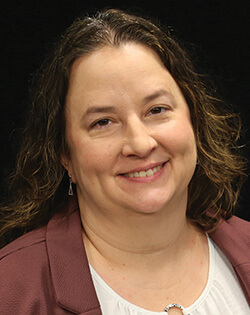
We often talk about physical health and mental health, but there's another pillar of well-being that we've been overlooking—It's at the root of why so many of us feel exhausted despite rest, disconnected despite success, and burned out despite all our wellness practices. Creative health is the emerging field focused on the cognitive and emotional capacities that allow us to feel genuinely rejuvenated, vital, and fully alive. In this keynote, Katina Bajaj, creative health scientist and chief science officer of Daydreamers, explores why creativity is a biological necessity in an overwhelmed world, how it revives our nervous system in ways sleep alone cannot, and the science-backed practices wellness professionals can bring back to their work and organizations. Attendees will leave with an accessible new framework for understanding vitality and practical tools to help themselves and their communities reclaim what makes them feel most alive.
Attendees will be able to:
- Understand creative health as a distinct dimension of well-being, alongside physical and mental health
- Learn the neuroscience behind why creative engagement uniquely restores vitality and combats burnout, especially for underserved populations
- Identify the barriers to developing creative health in individuals and communities
- Gain practical, evidence-based practices to integrate creative health into existing wellness frameworks or programs.

8:15 AM - 9:15 AM
Building and sustaining an employee wellness program can feel overwhelming—especially within complex local government and public health settings. In this interactive session, participants will learn how one of the nation's largest local health departments designed, implemented, and scaled a comprehensive employee wellness program serving over 7,000 staff. Attendees will explore actionable strategies for assessing workforce needs, securing leadership buy-in, strengthening partnerships, and expanding wellness offerings across diverse worksites. Whether launching a new program or enhancing an existing one, participants will leave with practical tools and a clear action plan they can apply immediately.
Attendees will be able to:
- Describe at least three foundational components required to design and implement a comprehensive employee wellness program in a local health department or government agency
- Identify two or more methods for conducting staff needs assessments and using data to guide program planning and evaluation
- Develop an initial action plan outlining strategies for stakeholder engagement, communications, and sustainable program growth and expansion within their own workplace.
8:15 AM - 9:15 AM
Connection supports well-being when it is grounded more in attention rather than in evaluation, fixing, or performance. This skill-building workshop trains wellness professionals in three practical listening practices that foster presence, curiosity, and psychological safety. The practices draw from applied research on attention, inquiry, and connection (capacities often described in positive psychology as foundational to wonder and human flourishing) without requiring therapeutic disclosure. Participants will learn how to guide these practices with clear instructions, appropriate pacing, and professional boundaries.
Attendees will be able to:
- Facilitate listening practices grounded in nonevaluative attention and curiosity
- Use simple somatic anchoring techniques to support presence while listening
- Guide structured connection exercises that foster well-being without therapeutic framing.
8:15 AM - 9:15 AM
Join us for an inspiring conversation with leading wellness experts—each bringing over two decades of hands-on experience in shaping employee wellness strategies, consultations, and programs. Through powerful storytelling, we'll dive into the real challenges of supporting organizations that struggle to fully embrace mental health, substance misuse, food insecurity, and more. Expect candid insights, hard-earned lessons, and honest dialogue about the future of our industry in the face of AI, “social influencers,” and shifting government messaging. Most importantly, this interactive session will challenge you to go beyond ideas—transforming them into actionable plans that strengthen your confidence and commitment as a wellness professional long after the Summit ends.
Attendees will be able to:
- Discover and practice simple acts of kindness in small groups—strategies you can immediately apply in your professional work
- Learn powerful micropractices from our panelists, designed to help you maximize your long-term impact as a true agent of change with a seat at the table
- Create a personalized action plan and commit to a 30-day follow-up with a panelist to review your progress and build lasting confidence.
9:30 AM - 10:30 AM
Building strong connections at work often starts the same way great learning does—with curiosity and a brave little hello. At a time when the U.S. Surgeon General has identified loneliness as a growing public health concern, the workplace has become one of the most important places to rebuild meaningful human connections.
In this session, participants will explore how the key variables of strong relationships show up in everyday work interactions.You’ll discover how asking better questions, sharing experiences, building trust, and communicating with intention can transform routine moments into stronger team connections—even in hybrid or remote environments. This session stands alone but pairs perfectly with the companion session Connection by Design: Because Every Great Bond Starts with a Weird Hello.
Attendees will be able to:
- Identify key elements that contribute to strong workplace relationships and a culture of belonging
- Evaluate everyday workplace interactions and attain action steps to incorporate specific changes that would increase connection, trust, and inclusion among colleagues and teams
- Implement tools and practical approaches gained throughout the session to support collaboration within their workplace.
9:30 AM - 10:30 AM
Most of us carry far more stress than our bodies were designed to hold, and our tendency to stay “on” long after the moment of challenge has passed leaves our bodies flooded with lingering stress hormones. Drawing on her background in science education and poetry, along with positive findings from a year's worth of data from her Managing the Stress Cycle program, Skye Nicholson blends evidence-informed stress science with engaging expressive writing practices. Participants will take part in two simple, interactive, poetry-based micropractices, supported by decades of research on expressive writing and its impact on mental health, emotional processing, and physiological regulation. The session demonstrates how practical tools to close the stress cycle can be integrated into meetings, check-ins, or trainings to strengthen resilience, promote work-life balance, and build connection, leaving attendees with clear implementation ideas for fostering healthier work environments.
Attendees will be able to:
- Explain the concept of the stress cycle and describe how incomplete stress responses contribute to chronic stress, physiological strain, and diminished workplace well-being
- Identify common numbing habits that interfere with completing the stress cycle and evaluate alternative evidence-informed strategies for reducing stress hormones and restoring regulation
- Apply a simple, evidence-informed expressive reflection micropractice and adapt it for use in various settings, such as team meetings or professional development sessions, to support healthier coping, improved communication, and a more balanced work experience.
9:30 AM - 10:30 AM
Ritual is a human technology for meaning-making, transition, and resilience—Yet, it is often misunderstood as religion or dismissed or mischaracterized as unscientific. This skill-building lab trains wellness professionals to design and facilitate brief microrituals (two to five minutes) that support recovery from burnout and moral fatigue in diverse settings. Participants will learn a simple, repeatable, ritual-design framework and practice applying two critical safety filters: a No-Bypassing Check (to prevent forced positivity harm) and a Cultural Humility Check (to support ethical adaptation, attribution, and audience fit). Learners will leave with two facilitation-ready microrituals, a short facilitation script, and take-home templates they can implement immediately in workplaces, campuses, and community programs.
Attendees will be able to:
- Differentiate between ritual, habit, and routine, and explain at least two evidence-informed ways ritual supports resilience and meaning-making
- Design and document two brief microrituals (two to five minutes) using the Intention → Symbol → Action → Witness → Integration framework
- Apply and evaluate two ethical safety filters—No-Bypassing Check and Cultural Humility Check—to revise a microritual for inclusivity, consent, and professional appropriateness.
10:45 AM - 12:00 PM
The future of work is flexible, digital, and rapidly evolving—but human connection remains the key to thriving teams and organizations. In an era where isolation and disengagement are on the rise, leaders must be intentional about fostering trust, collaboration, and authentic relationships. This talk explores how to create a culture where connection drives innovation, well-being, and long-term success—whether in the office or across a screen.
Attendees will learn:
- Why connection is the #1 driver of engagement, trust, and collaboration
- How to foster meaningful connections online (Zoom or TEAMs), offline (in the office or field) and in-line (with yourself)
- The impact of social well-being on employee mental health and performance
- Practical ways to create a Workplace Where People and ideas thrive
2026 Speakers
Continuing Education Credits
Earn the CE credits you need to maintain your wellness and benefits-related designations!
CE credits are available for attending educational sessions during the 2026 Annual Wellness Summit's Core Conference, July 28-30 and for participating in a Preconference on July 27. CE credit approval for all sessions is not guaranteed.
All educational sessions are pre-approved for Category 1 CE credit for Certified Wellness Practitioners (CWP). CEBS Compliance credits may be earned for select sessions. The Wellness Alliance is also applying for CE credit approval for the following organizations/designations: ACSM, NCHEC (CHES®/MCHES®), HRCI®, NBHWC, and SHRM®.
Updates regarding the
number and types of credit available for each Core Conference session
and for the Preconferences will be posted here closer to the Summit.
Claiming Credit
To
receive credit for all sessions you attend in full, ensure the Summit
staff outside the session room initials your CE Credit Checklist as you
leave each session (including Preconferences and Keynote Presentations).
Printed copies of the Checklist may be picked up at the registration
table. CE Credit Checklists must be turned in at the registration table
by the end of the Summit. Certificates will be emailed within six weeks
to participants who have claimed credit.