




Financial Education/Retirement Security (U.S.)
Financial stress impacts productivity, job performance, ability to focus at work and staff turnover. Help your participants learn the basic tools, habits and behaviors needed to achieve financial goals. Find financial education and retirement security program support in the resources listed below.

Financial Wellness Workshop
August 12, 2026 | 11:00a.m. - 3:00 p.m. ET
Unlock the potential of a financially healthy workforce in our comprehensive workshop on financial wellness. This session will delve into the critical aspects of financial wellness, from defining the concept to understanding its impact on retirement planning and employee stress. Explore how employers are currently delivering financial wellness programs and discover innovative strategies using behavioral finance to enhance engagement and outcomes. Join Erik Carter, Personal Financial Coach at Financial Finesse, while he leads you through our financial wellness discussion.
More Information
Organizational Strategies for Health and Financial Wellness
The complexities of managing and retaining talent at your organization have increased in the past few years. This course is designed to explore the importance of financial literacy and wellness in your organization and discuss effective ways to measure and identify what works and what doesn't in attracting and retaining your organization's employees. Discover new ways to handle situations such as succession planning and communication strategies in this two-day course with your peers and experts in the field. Ensure your organization is on the right track for success, and network with others to gain new insights while gaining take-home action items to improve your organization's strategies for health and financial wellness.
More Information
Understanding Social Security
The impact of Social Security is far-reaching. Since its enactment in 1935, Social Security has become a primary means of funding retirement for many workers and their beneficiaries. This course is designed to help both employers and individual workers understand eligibility requirements, funding processes and ways to maximize benefits in anticipation of applying for Social Security or Social Security Disability Insurance (SSDI).
Learn More
Financial Skills for Life: An Introduction to Personal Finance
Young workers have a lot to learn. Not only are they acquiring new job skills, but it may be the first time many of them have been offered benefits or earned a substantial paycheck. This approachable online course will help new workers build solid personal finances. It highlights the issues they should consider as they are getting started in their jobs and provides helpful tools for the future.
Learn More
Financial Literacy That Actually Improves Benefits Outcomes
This webcast is designed for benefits professionals, trustees and wellness leaders and focuses on improving benefits engagement and utilization through behavior-based decision support. Instead of exploring plan design changes or new program additions, it highlights practical strategies to influence participant behavior, support smarter benefits decisions and increase the impact of existing offerings.
Watch Webcast
Making Retirement Plans Work in Retirement
DC plans have primarily been designed to help participants save and invest for retirement, with limited consideration for helping them manage the transition to drawing income once they stop working. The result is a retirement system that doesn’t work particularly well during retirement, when employees are tasked with turning what may be their single biggest asset into reliable, long-lasting income—often with little or no assistance. The good news: A growing number of retirement income solutions are becoming more readily available within DC plans. Each solution, however, can come with its own set of potential benefits and trade-offs, making it important to understand which approach may make the most sense for a particular plan’s needs and goals.
Watch Webcast
Understanding the Basics of Portfolio Monitoring and Securities Litigation
This session will show how effective portfolio monitoring can uncover opportunities to restore lost investment value to retirement funds while trustees fulfill their fiduciary responsibilities. It will also showcase tools that trustees and plan professionals can leverage to better protect their funds, demonstrate how litigation can be a powerful strategy to fulfill fiduciary responsibilities, and explore how changes in SEC priorities make private securities class actions all the more crucial. Real-world case studies will illustrate how funds have successfully engaged in the litigation process to achieve meaningful recoveries.
Covered Topics:
- Demystifying portfolio monitoring—what it is, what it costs and why it matters
- Connecting the dots—how portfolio monitoring supports and drives securities litigation
- Strengthening governance—how engaging in portfolio monitoring helps trustees meet fiduciary duties
- Learning from experience—a review of select key cases and real-world outcomes.
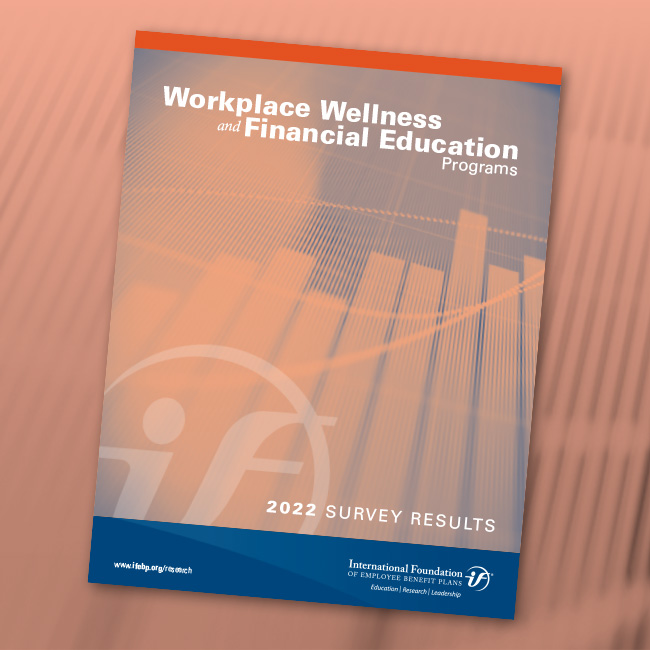
Workplace Wellness and Financial Education: 2025 Survey Report
Workplace wellness programs have grown to include benefits that address workers' mental health, financial health, growth and purpose. Workplace Wellness and Financial Education Programs: 2025 Survey Report, reveals details about current initiatives and insights into the changing needs of employees as well as the growing importance of wellbeing and financial stability, covering personal factors impacted by financial challenges, impact on work performance and solutions through financial education.
View Report
Retirement 101
Select from a defined benefit plan, defined contribution plan or a plan for public employees. Find out more about what each plan is, how much money you will get and when, different scenarios, and who pays for your benefits. This is the perfect tool to share with plan participants wanting to learn more about the power of their retirement plan.
Use Tool- Financial Education Program Checklist - This checklist gives learners the tools they can use to make money management decisions throughout their lives and provides questions to consider as employers build their workplace financial education program.
- Monthly financial education tips - Help your workforce increase their financial fitness by sharing these helpful month-by-month tips.
- Checklists and worksheets for employees - Help your workforce increase their financial fitness by sharing these helpful financial education tools and tips: Retirement security strategies checklist, questions to ask when choosing a financial education vendor, financial education needs assessment, tips and worksheets for workers with less than 15 years from retirement and for those more than 15 years from retirement.
- Ten Ways Behavioral Finance Can Boost Retirement Security - The insights of behavioral finance have the potential to help employers, plan sponsors and plan administrators make changes that can yield a substantial difference in the actions of employees and plan participants. Here are ten tips based on the principles of behavioral finance for helping workers achieve a secure retirement.
- Retirement Security Strategies - Use these suggested retirement security strategies based on your goals to help your workforce prepare for retirement.
- Benefit Basics Templates for Participants - This resource allows plan sponsors and employers to easily share helpful information with their employees on a wide range of benefits-related topics. Select resources are customizable, making it easy to add your company logo and share.
Articles
The Descent: Asset Decumulation After Retirement (Benefits Magazine, March/April 2026)
Managing withdrawals and sustaining income during retirement poses risks that are often greater than those encountered while saving for retirement. The hiking analogy used in this article may help plan participants - especially those nearing retirement - understand the risk as well as mitigation strategies. What are risks and mitigation strategies for those descending into retirement? Risks include longevity risk, sequence-of-returns risk, negative cash flow in retirement plans, and liquidity risk. Strategies for mitigating risks include systematic withdrawals, lifetime income products, tax-efficient withdrawal sequencing, and diversification and bucketing.
The Evolution of QDIAs: Unlocking Better Retirement Security? (Benefits Magazine, January/February 2026)
Qualified default investment alternatives (QDIAs) offered in defined contribution (DC) plans seek to ensure that participants who don't actively manage their accounts earn better returns. Newer QDIA models that include lifetime income options may help boost retirement income security. What are examples of existing and newer QDIA models? Existing types of QDIAs include target-date funds, balanced funds, and managed accounts, while emerging models include dynamic and hybrid QDIAs and lifetime income options.
Implementing and Expanding an Emergency Savings Benefit Program: A Strategic Approach for Employers (Benefits Quarterly, Fourth Quarter 2025)
While many employers are eager to provide emergency savings benefits to improve employee financial well-being, selecting and implementing the right solution can be a challenge. This article explores the lessons learned from The Fresh Market, Inc.'s emergency savings benefit rollout to its grocery store workers, providing a roadmap for other employers looking to implement similar programs. What valuable lessons can other benefits professionals take from these programs? Key lessons include starting with available resources, offering a range of solutions to meet diverse employee needs, using test-and-learn pilots to support stronger rollouts, keeping programs simple to encourage participation, and recognizing that emergency savings programs can be a gateway to broader financial health.
Late-in-Life Issues: The Impact on Retirees and Caregivers and How Employers Can Help (Benefits Quarterly, Third Quarter 2025)
Addressing late-in-life concerns in employer financial wellness programs can help educate employees about how to incorporate such issues into their own retirement planning and help them patch gaps in their care of family members who are 85 and over. What should be considered when planning for late-in-life concerns? Issues to be considered include retirement planning and financial management; control of decisions, legal documents and professional help; managing health care; housing and transportation; and creating a support network.
Engaging ERGs to Drive Deeper Financial Wellness (Benefits Magazine, July/August 2025)
Integrating diversity, equity and inclusion (DEI) strategies into financial wellness programs can help organizations drive lasting improvements in their employees' financial well-being - especially when programs work through trusted peer networks, such as employee resource groups (ERGs). What are key best practices - used in large employers' financial wellness programs - and insights into how they partnered with ERGs to deliver measurable results? Several common strategies are emerging: Listening first and empowering ERGs to lead the way, using artificial intelligence (AI) and ERGs to personalize programming, building connection through peer panels and cross-ERG collaboration, measuring the return on investment (ROI) of financial wellness programs for ERGs, and connecting financial wellness across benefits offerings.
More articles available in Benefits Knowledge Center
Additional Resources
- InfoQuick - Retirement Security and Planning: Financial Education/Retirement Security - Survey Data
- InfoQuick - Retirement Security and Planning: Financial Literacy/Retirement Planning
- Legislative Tracker
- Regulatory Updates
- Sample Documents
- Financial Wellness and Education in the Workplace: Strategies and Best Practices - The purpose of this paper is to summarize the ways financial distress negatively impacts people's personal and work lives, explore the factors contributing to financial well-being that might be targeted as part of a holistic workplace wellness program, identify workplace strategies that can improve financial well-being and help mitigate the organizational costs of financial distress, and provide an overview of steps involved in initiating a financial education program - one element of a financial wellness program - and best practices that can contribute to the success of a financial education program.
Videos
Podcasts
Ask a Benefits Question
Not finding what you're looking for? We'll do the digging for you on any benefits-related topic.
Reach out to an Information Specialist today.